Showing posts with label Sacrifice. Show all posts

Thursday, April 1, 2010

continuous sacrifice

lamb It is a regular burnt offering, which was ordained at Mount Sinai for a pleasing aroma, a food offering to the LORD.

Numbers 28:6


Atonement for sin was a costly procedure in ancient Israel. Every day two lambs were offered to the Lord at the altar as public sacrifices. That does not even count private, individual offerings. In addition, on Sabbath, two more lambs were offered beyond this. Monthly on the first of the month (like today) two bulls, a ram, seven lambs, and a goat would be added to the tally. During feasts, that “first of the month” formula kicked off the the feast.


So sacrifice was a blood-soaked litany for Israel. It was part of the daily experience of worship at the altar. There was never a break from the constant atonement for sin. The tabernacle was a literal slaughterhouse where this occurred over and over, day after day, in obedience to God’s command.


This has led me to a significant Maundy Thursday reflection for this week. Jesus, my Passover Lamb, has been sacrificed once for all (1 Corinthians 5:7). I don’t need to have my focus fixed on how I will atone for my sin. Instead, I look to a Savior Who died and rose again to end my estrangement from God and forgive my sins.This is significant. I celebrate the completion and not the action of sacrifice. I trust in His saving work and celebrate it daily by offering Him the living sacrifice of my life (Romans 12:1-2).


Wednesday, March 3, 2010

Simple obedience should not be undervalued.

rmdn_obedience_zone Then after that the Levites went in to perform their service in the tent of meeting before Aaron and before his sons; just as the LORD had commanded Moses concerning the Levites, so they did to them.

Numbers 8:22


The Levites as a tribe were dedicated solely to the service of the Lord in worship at the tabernacle. They were uniquely, publically dedicated to this service. Any male Levite, from the age of 25 until mandatory retirement at 50, was trained to serve in the work of the sacrifices and worship of Yahweh. It was a life vocation.


Moses, Aaron, and the people of Israel heard God on this request. The Levites obeyed God’s call. A special tribe and class of people was then called and pressed into service before God. And the nation obeyed, rejoiced in God, and was blessed by this obedience.


There is just a surface thought that grabs my attention as I read this chapter. It has to do with obedience to God. Obeying God above and beyond my own whims is an important practice. It is a living and practical outcome of faith. Israel did not analyze these instructions. There was no debate or counter-offer back to God. They followed what God asked. Period. No discussion. It involved sacrifice and change, particularly for all the families in the tribe of Levi, but they did it willingly. That attitude of willing obedience is still important for believers today.


My present circumstances demand simple and complete obedience. Honestly, there are times when my flesh does not want to obey. Ministry is demanding and it takes a toll on what my fleshly self wants out of life for ME. But that simple obedience is more valuable than many other things I might give to God. I know He wants to satisfy me when I sacrifice. I will be satisfied in God when I do so. I value this above anything else I want, because, frankly, it is all I know in life.


Monday, November 30, 2009

The cost of sin.

For the life of the flesh is in the blood, and I have given it for you on the altar to make atonement for your souls, for it is the blood that makes atonement by the life.

Leviticus 17:11

tabernacle from above

Someone or something had to die when sin entered the world. Human beings lost a lot in that transgression. God made it clear to the Israelites that they needed to remember the cost of sin with the regular sacrifice at the altar. And this also affected certain dietary restrictions. To remember the cost of sin meant not eating the blood of any animal ever. It meant practicing a form of slaughter that drained as much blood from the animal as possible. All this was meant to show a regular appreciation for the atonement that took place at the altar. A calloused view of blood meant a disregard for relationship with God.

This prohibition was important enough that it was the one thing about the Old Testament Law that the early church felt compelled to remind Gentiles. All people should respect that blood is offered in atonement of sin (Acts 15:20). That regular reminder in the Jewish diet was really a form of regular worship. It acknowledged that sinners needed a sacrifice.

I see the wisdom in that reminder, and it is one reason why the New Testament church should at least regularly observe the Lord’s Table. It is in the symbols of the bread and the wine that we remember the cost of our sin, the sacrifice of our Savior, and the blood that was shed for the remission of sin. My sin is a costly mess. It literally cost God the ultimate sacrifice. Regularly remembering that is healthy for my soul.

Wednesday, November 25, 2009

Atonement Day

“And this shall be a statute forever for you, that atonement may be made for the people of Israel once in the year because of all their sins." And Moses did as the LORD commanded him.

Leviticus 16:34

goat head The regulations for the Day of Atonement were strict and demanding. You can quickly see that the priests worked hard, and the high priest was tasked with huge responsibility to make sure that God’s requirements for this vital yearly sacrifice were kept fully. At issue was the spiritual health and forgiveness of the entire nation. Obedience to this was crucial for God’s blessing and for spiritual progress to develop. God could continue His relationship with the struggling nation if they would offer the sacrifices for atonement of all their sins for that year.

But the levitical system was limited. A sacrifice for this event was made every year. In addition to that untold sacrifices for sin and guilt offerings were made day after day throughout the year. The altar was a bloody place that was constantly busy with the work of repentance, confession, sacrifice, and commitment.

This one day of the year all that halted for one special set of sacrifices that was meant to atone for all the sins of all the people. It was a day to celebrate fellowship with God through His willingness to forgive. As such, it became the high point of the Jewish Year, the start of a new year for the nation with God. Our atonement gives us a fresh start as well, only the affect is for a lifetime and not just the next twelve months. For that I am truly thankful.

Lord Jesus,

I thank You for being the final, complete, last sacrifice for sin. I can do nothing or offer nothing beyond what You have done. I trust in Your forgiveness and I experience it. Of all the things that I have right now for which to be thankful, this is the most significant.

Amen

Wednesday, November 18, 2009

The poor can’t be kept from God.

2Pigeons

And if she cannot afford a lamb, then she shall take two turtledoves or two pigeons, one for a burnt offering and the other for a sin offering. And the priest shall make atonement for her, and she shall be clean.

Leviticus 12:8

The provisions in this short chapter of Leviticus have to do with the restoring of a woman to the covenant community after the birth of a child. Much of the ritual purity practice had to do with blood, and since blood was shed in the birth of a child, a period of ceremonial uncleanness resulted from that birth. The woman needed to fulfill the law in that regard. Then, after the “days of her purification” were complete, she could go to the priest and offer a sacrifice that was meant to restore her to full community with God and His people.

The poorest of the poor might have trouble offering a lamb (which was the required offering). God freely allows that this is a hard sacrifice for the poor and allows them to substitute two turtledoves or pigeons instead. This is exactly the situation that the parents of Jesus found themselves in (Luke 2:22-24). Jesus entered the poorest of Judean homes. When the time came for Jesus to be presented at the temple, his humble parents brought the sacrifice of the poorest of the poor.

It moves me when I consider that when God gave this command to Moses so long ago, He knew that He would send His own Son into a home that would be directed by its provisions for the poor. God could have come into a more well-to-do Jewish home. He could have been born into better circumstances. But he came to nearly the lowest economic position. Simple peasants welcomed the King of Kings into this world.

God provides for the needs of the poor. The law is full of provisions out of concern that Israel not create a society that trampled those in poverty. But God also made those provisions such that the poor had something to offer to Him. He expected them to sacrifice. He made provisions in the agricultural dictates that allowed the poor to work and glean grain. He provided a means for the poor to find dignity, respect, work, and respect as human beings, even in their poverty. There were no handouts, just the offer of understanding, hard work, and the means to have basic needs provided for by caring neighbors.

In worship, the poor were invited to join in the celebration. They were given the chance to offer what they could, to praise the God of the covenant, and to equally participate in its observance. They were brought into worship because God wanted them there just as much as anyone else. He desires that all men worship Him, great and small, rich and poor, because His glory is worth celebrating.

Technorati Tags: ,,

Tuesday, November 3, 2009

forgiven

priests at the altar

And the priest shall make atonement for him for the sin which he has committed, and he shall be forgiven.
Leviticus 4:35b

You cannot escape the fact that holiness is a major theme of the book of Leviticus. The entire sacrificial system was set up by God to create a means of fellowship and a way for sin to be dealt with in Israel. God is holy. We are not. Something has to happen to provide a means to relationship with Him. Chapters 4 and the first half of chapter 5 describe the details for what is called the “sin offering”. The conditions for this sacrifice had to do with the nature of the sin. It was “unintentional” – a natural outworking of human fallen depravity. Sometimes we just sin because we are sinners. It is what we do. We are naturally skilled at it. But that sin puts us at odds with a holy God.

The second condition for offering the sin offering was that the individual becomes aware of his or her guilt in the unintentional sin. Either the offended party makes them aware, or they eventually see the disastrous results of personal depravity for what they are. The guilt checks them from really moving forward with God. They need forgiveness.

Another interesting observation was that societal status changed the requirements for this sin offering. At the top of the list was the unintentional sin of a high priest. There the sacrificial animal was an expensive bull. But there were different requirements for the nation as a whole, or for individuals who had sinned unintentionally. Lesser expenses were involved by the type of livestock offered. There were also different requirements based on the type of unintentional sin. The point was that God was not harsh and unrelenting, but understanding in the way He dealt with people who by nature sin so much they don’t always know they did it. God’s grace covers the “oops” factor.

For me, as I read this, the important thing that keeps coming out in every detailed episode of the type of sin and accompanying sacrifice was that GOD FORGAVE THE REPENTANT HEART. These simple five words are profound: “…and he shall be forgiven”. God will completely forgive. He offers a way back. He reaches out to the one who will return. He knows we are dust. He forgives. He provides a way for relationship with us despite our very natures. That is love that abounds to sinners. And that love is here in the harsh little book of Leviticus. Even as the blood of the sacrificed animal drips from the altar in each episode, the love of God forgives the sinner. How much more do I know this in Christ, Who gave Himself for me so that I might be a forgiven sinner as well? The phrase “…and he shall be forgiven” applies to my heart as well. It is the promise that truly brings me peace, perspective, and joy. It comforts and strengthens my heart… daily.

Monday, November 2, 2009

Communion with God is messy.

And he shall lay his hand on the head of his offering and kill it at the entrance of the tent of meeting, and Aaron's sons the priests shall throw the blood against the sides of the altar.

Leviticus 3:2

sacrifical lamb Chapter three of Leviticus is all about the peace offering. The ESV Study Bible gives a great summary of what this peace offering was all about: “This offering achieves and expresses peace or fellowship between an offerer and the Lord. The ritual as a whole symbolizes a communion meal that is held between the offerer, the officiating priest, and the Lord. In OT times such meals were a means of affirming a covenant relationship (Gen. 26:28–30). Generally speaking, then, this offering was a time to remember and reaffirm the covenant relationship between the Lord and Israel (cf. 1 Cor. 10:16–18; 11:23–26). As with the burnt offering, there are various specific motives for offering a peace offering, ranging from petition to praise. In this chapter, though, the entire emphasis is on the procedure for the offering, with a special focus on the burning of the fat.”

The peace offering was one in which the person giving the animal in sacrifice was allowed to eat of the sacrifice. There were prohibitions (Leviticus 3:14-16) and God was given the best part since “the fat” does not mean just fat, but also the meat around it, which any gourmet is going to know is the most succulent portion. But this offering symbolized a shared communion with God by the worshipper. As such it was a unique offering.

But even this fellowship had reminders of sacrifice. The priest would lay his hand on the head of the offering before killing it. And the blood of this animal was sprinkled against the sides of the altar. Even in fellowship, there is a reminder of our need for atonement. Blood is shed on the altar. Just yesterday, in observance of the Lord’s Table, I spent time with my church family celebrating communion. And looking into the cup, I was reminded of my Savior’s sacrifice that brought me peace and fellowship with God.

Peace with God must come with sacrifice. Sinners are loved by God, but atonement and forgiveness come with a certain messiness. In the Old Testament, the slaughterhouse of the levitical worship system reminded Israel of their redemption for fellowship with God. At certain seasons, the channel of blood running out of the temple was flowing with this sacrificial stream like a small crimson river. And the dying Lamb of God is always recognized by believers today when the common cup and loaf are shared.

Technorati Tags: ,,

Wednesday, October 28, 2009

Without blemish.

altar_of_burnt_offering If his offering is a burnt offering from the herd, he shall offer a male without blemish. He shall bring it to the entrance of the tent of meeting, that he may be accepted before the LORD.

Leviticus 1:3

I will spend the next five weeks or so working through Leviticus. I have to admit that it is the most difficult part of the Bible for me to study through. But it is worth the effort, because the holiness of God is one of the very clear themes. And even though the responsibilities of the Levitical system are no longer a requirement since Christ’s final atonement, they are instructive on the nature of God, and the nature of our commitment to Him.

There were a wide variety of offerings that were part of the worship of God by Israel, and it is important not to confuse them when reading this book. The ESV Study Bible has this excellent chart to keep them in perspective (click on the table for a larger version).

5 major offerings

The main requirement for the burnt offering was that it be a male from the flock “without blemish”. God was not going to take the second best, or something that no one else would have been satisfied with as a gift. God wanted the best. And He is owed that in our worship. So many times I am tempted to give Him my leftovers and blemishes today. One reason that I feel compelled to cultivate the habit of getting into His Word within the first hour of my rising in the morning is that for me, that is the most unblemished part of my day. I am at my most alert (most mornings), most optimistic, and most receptive. It is also the quietest part of my day because I have made the effort to wake up a good hour before the rest of my family. And the dark early morning has become the time that I offer in worship to God. I do not regret it.

Lord, Here I am at this unblemished time. Please show me the importance of offering to You the best that I have. In the thick of my busy, insane schedule and demanding ministry I am often tempted to just find the leftovers for You. I know that is not what is best for us. Train me to be holy in my time and in my commitment. I want Your to get the best, the all, the offering of this life. Amen.

Technorati Tags: ,,

Tuesday, September 1, 2009

Finishing to blessing.

According to all that the LORD had commanded Moses, so the people of Israel had done all the work. And Moses saw all the work, and behold, they had done it; as the LORD had commanded, so had they done it. Then Moses blessed them.

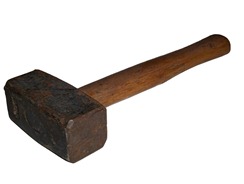
Exodus 39:42-43sledgehammer

There is a modern proverb: “Hard work is its own reward”. That is not necessarily the case. Many people work hard throughout the world with nothing but pain to show for it. I watched a report on 60 Minutes Sunday night that showed the hardships “recyclers” pay in China. They live in filthy slums on the recycling plant. Harsh toxic chemicals from the computer CRT screens that get sent there to be recycled pollute their homes and drinking and bathing water. They are covered in sores from chemical burns received at the plant as they breakdown TV monitors and computer equipment. They work hard. Their children suffer in the slums they live in. And they receive enough pay to buy a little rice and that’s about it. The US and European companies that send the technology to China to recycle taut it as saving the planet. It is killing people. So much for green jobs.

But hard work for the glory of God is a different matter. It is blessed by God. In this passage Moses saw all the detailed final product of the work to build the tabernacle and its furnishing. And Israel obeyed God to the last detail of the construction. It was pleasing to God. It was hard work, but it was blessed. They obeyed and God was pleased through their leader.

Blessing in ministry is important. Many times churches ask people to work hard behind the scenes. It takes a lot of that kind of work to make the kingdom of God what it is in this world. The metaphor of the New Testament is that the church is God’s building built of many stones. Some are elaborate pillars readily seen. Others are foundation stones buried under the floor that hold it up. But every stone is needed, and is to be celebrated because we are “living stones”. I am so thankful for the scores of people who serve the Lord in my church! They make the ministry such a joy and blessing. May God bless His Church through all the efforts each of us makes in service to the kingdom. One day we will all stand before Him in the glory of His presence. And we want to finish well. We want the joy of His simple blessing to us: “Well done, my good and faithful servants.”

Technorati Tags: ,,

Tuesday, April 21, 2009

The cross was no accident.

stone cross

As they were gathering in Galilee, Jesus said to them, "The Son of Man is about to be delivered into the hands of men, and they will kill him, and he will be raised on the third day." And they were greatly distressed.
Matthew 17:22-23

Jesus was aware of His redemptive purposes. His crucifixion was no accident. It was the plan of the Father that He accepted and knew was coming. This was NOT going to be easy for His disciples to undergo, and with this warning, Jesus has spoken of it twice according to Matthew's account. And it caused a stir among His men.

The ESV Study Bible notes seem to show us that the stir was created by the new information that Jesus would "be delivered into the hands of men", indicating a betrayal from among His own ranks. This would make sense, because when the hour did come, the disciples fled in fear, making them all disloyal to some degree or another. But the distress at hearing their Master say these things must have had the entire entourage of the twelve talking.

Jesus, however, did not seem distressed at this point. His prophetic warnings seem more to prepare the disciples then to protect Himself from this purpose. It was love that was driving His heart and His life. And it was love that would give Himself over to the redemptive plan of God. It was love that would let sinful men take a holy God to public torture and execution. And it was love that would bear the sin of the world as the Lamb of God.

Lord Jesus,
You were never surprised by the cross. You saw it as the goal of all You wanted to give us. And I know that I can only receive and contemplate that love, hoping that someday I might appropriate enough of it to love just a little like You do!
Amen

Thursday, February 5, 2009

God will provide.

abraham and isaac

7    Isaac spoke to Abraham his father and said, "My father!" And he said, "Here I am, my son." And he said, "Behold, the fire and the wood, but where is the lamb for the burnt offering?"
8    Abraham said, "God will provide for Himself the lamb for the burnt offering, my son." So the two of them walked on together.

Genesis 22:7-8

This first recorded conversation between Abraham and his son Isaac is poignant and a testament to faith. God had instructed Abraham to offer his only son of the promise as a burnt offering. And Abraham believed that obeying God in this was what he should do. When Isaac asks this question, Abraham is not lying. I believe Abraham saw this for what it was: as test of faith.

In the New Testament, the book of Hebrews comments on this episode and offers insight into Abraham’s faith: he believed God would raise Isaac back. After all, God had already promised that Isaac was the son of the promise. So if God took him in sacrifice, God would have to raise him up because God does not lie. And so an old man and his young son walk on up the mountain to build an altar.

And God did put Abraham’s resolve to the test. Dramatic tension increases as Isaac helps prepare the altar and the wood, and then the old man binds his son and lays him on the altar, ready with knife to kill him like a lamb and burn him in sacrifice. It is then that God stops the action, pronounces satisfaction on the ancient faith of Abraham, and does exactly what Abraham prophesied: a ram is caught in a thicket to be sacrificed in Isaac’s stead.

Of course this is not a passage to be literally applied. The resulting trauma to any child (outside of the call of God) would be abusive. But I can see times in which God has called me to obey, to wait through the seemingly unthinkable until He has provided. And it is always worth the wait because God will provide.